
Anchoring Sarawak’s central inland and coastal plains, Betong Division represents a powerful blend of rich cultural heritage and modern agricultural innovation. Steeped in history—from the legendary heights of Bukit Sadok to the vibrant longhouse communities along the Layar and Saribas rivers—Betong has emerged as a key driver of Sarawak’s economic future.
Under the Post COVID-19 Development Strategy (PCDS 2030) and the Regional Corridor Development Authority initiatives (including RADDA), Betong is rapidly transforming into Sarawak’s premier high-tech Food Basket Hub. With major projects like the Bebuling STOLport, the Collection, Processing and Packaging Centre (CPPC) in Spaoh, and expanding commercial corridors in Saratok and Bandar Baru Betong, daytime energy requirements across the division are scaling fast.
Transitioning Betong’s processing plants, schools, commercial plazas, coastal industries, and modern longhouses to rooftop and ground-mounted solar PV is the most practical way to lower overhead costs and secure sustainable growth for generations to come.
1. Sarawak’s Agri-Food Basket & Bebuling Agropark: Powering Export Logistics
At the core of Betong’s economic evolution is its designation as Sarawak’s agricultural innovation engine. Key developments—such as the 300-hectare Bebuling Agropark, the CPPC in Spaoh, and air-cargo logistics at Bebuling STOLport—are built to streamline the farm-to-table pipeline, exporting high-value fresh produce directly to regional markets like Singapore.
AGROPARK & COLD-CHAIN DAYTIME DEMAND
- Automated Agropark Infrastructure
- - Precision irrigation pumping & fertigation
- - Climate-controlled smart greenhouses
- Cold-Chain & Air-Cargo Hubs
- - Flash-freezing units for fresh produce
- - Cold storage rooms at CPPC Spaoh
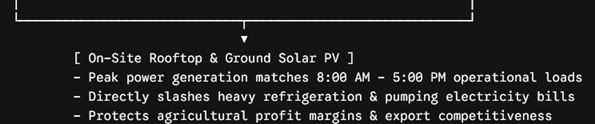
Operating high-tech agricultural infrastructure requires heavy daytime power. Smart greenhouses, precision nutrient pumps, flash-freezers, and climate-controlled storage facilities must operate continuously during peak daylight hours 8AM to 5PM.
Solar energy provides clear advantages for Betong’s agroparks and processing hubs:
Direct Operational Cost Reduction: Solar panels generate maximum energy when irrigation pumps, chilling compressors, and packaging lines run at full load.
Strengthening Agricultural Margins: Lower utility costs per kilogram of produce help local farmers, agro-entrepreneurs, and cooperatives remain competitive in export markets.
Sustainable Brand Positioning: Powering Sarawak’s premium produce with clean, renewable energy enhances product appeal among eco-conscious consumers globally.
2. Townships, Commercial Plazas & Educational Hubs: Protecting Operating Overheads
Beyond its agricultural centers, Betong supports a thriving network of commercial towns and educational institutions. From busy shoplots in Betong Town Center, Saratok, Spaoh, and Debak to major learning centers like Politeknik METRO Betong, Kolej Komuniti Betong, and MRSM Betong, daytime energy draw remains a consistent operational expense.
TOWNSHIP & INSTITUTIONAL SHIELD
- Commercial Shoplots & Retail
- - Supermarket freezers & display chillers
- - Multi-unit retail air conditioning
- Educational Campuses
- - Air-conditioned lecture halls & labs
- - Server rooms & administrative complexes
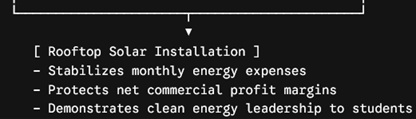
Running multi-split air conditioners, commercial refrigeration, bakery ovens, IT laboratories, and campus administrative buildings generates substantial daytime utility charges:
Fixed Cost Stability: Installing rooftop solar PV helps small business owners and commercial property managers stabilize monthly utility overheads against future electricity tariff changes.
Empowering Local Institutions: Lower electricity bills allow schools and colleges to reallocate funds toward educational tools, student activities, and campus improvements while setting a visible example of clean energy leadership.
3. Coastal & Riverine Agro-Industries: Preserving Rural Livelihoods
Betong Division’s agricultural diversity spans from the inland hills to its coastal and riverine communities. In Pusa, artisans harvest nipah palm sap to produce genuine Gula Apong; in Kabong, coastal fisheries rely on ice-making plants to preserve fresh catches; across Saribas, rice husking mills process local paddy; and integrated SALCRA projects combine livestock management with palm oil cultivation.
COASTAL & RIVERINE AGRO-INDUSTRIES
- Mechanical Evaporation
- Gula Apong processing in Pusa
- Ice Plants & Freezers
- Fishery cold-chain storage in Kabong
- Milling & Feed Machinery
- Paddy husking & livestock feed preparation

Converting raw harvests into market-ready goods requires substantial energy during daylight hours:
Lower Production Costs: On-site solar power directly offsets energy consumption during sap evaporation, ice production, and grain husking, lowering operating expenses for rural cooperatives.
Sustaining Rural Enterprise: Reduced overhead costs protect profit margins for fishing families, palm sugar harvesters, and local processors, keeping rural businesses resilient.
4. Suburban Growth & Modern Longhouse Solar: Beating the Inland Heat
Residential development across Betong Division is expanding rapidly. Modern residential estates in Bandar Baru Betong, Taman Meda, and Saratok—along with progressive, modern multi-door longhouses along the Layar, Saribas, and Krian river basins—are upgrading their living spaces for modern comfort.
In Betong’s tropical inland climate, afternoon temperatures rise quickly. Running ceiling fans, home refrigeration, and multi-split inverter air conditioners is essential for family comfort, study spaces, and elder care.
However, extended daytime air-conditioning usage can push household consumption past subsidized tiers and into SESCO’s higher rate brackets:
THE SESCO BILL BUFFER
- Without Solar
- - Heavy afternoon air-conditioning load
- - Pushes usage past 1,300 kWh threshold
- - Triggers SESCO's highest tariff bracket
- With Solar
- - Midday sun powers home cooling
- - Directly absorbs daytime household draw
- - Keeps net usage in lower tariff tiers
The SESCO “Bill Buffer”: High monthly power consumption can push household bills past subsidized limits and into SESCO’s highest tariff bracket (exceeding 1,300 kWh per month). A residential or longhouse rooftop solar system absorbs your daytime cooling and appliance loads as they occur.
Worry-Free Everyday Comfort: Generating clean power on your own roof during peak sun hours keeps net monthly grid consumption safely within lower tariff tiers, allowing families and longhouse communities to stay cool without facing unexpected bill spikes.
The Verdict: Solar Power for Betong’s Next Chapter
Betong Division is moving confidently into a new era of agricultural production, regional trade, and modern rural living.
Installing rooftop and ground-mounted solar PV is a practical, value-adding infrastructure choice. It reduces costs for export agroparks, protects business earnings in local townships, supports coastal processing cooperatives, and delivers affordable daytime comfort to modern longhouses and suburban homes alike.
As Betong leads Sarawak’s agrifood transformation, rooftop solar provides the sustainable, self-reliant energy to power that journey forward.