
Known affectionately across Sarawak as the “Town of Knowledge,” Samarahan has undergone a breathtaking transformation over the past two decades. What was once a quiet coastal division has blossomed into a bustling, vibrant hub of higher education, world-class medical excellence, rapid suburban expansion, and vital agricultural production.
With the expansion of the Kuching-Samarahan Expressway, modern housing developments, and institutional research complexes, Samarahan is growing fast. But rapid growth brings a shared challenge for institutions, business owners, and families alike: climbing daytime power requirements.
Fortunately, Kota Samarahan was built for the future. Integrating rooftop solar PV across our campuses, commercial plazas, processing facilities, and suburban rooftops is the single most practical, high-return way to power Samarahan’s next chapter.
1. Sarawak’s Town of Knowledge & Healthcare Belt: Powering Large-Scale Institutions
At the core of Samarahan’s identity is its position as Sarawak’s premier educational, scientific, and healthcare district. Institutions like Universiti Malaysia Sarawak (UNIMAS), UiTM Samarahan (Campuses 1 & 2), the specialized Sarawak Heart Centre (Pusat Jantung Sarawak), and nearby biotech research institutes form the intellectual heart of the state.
INSTITUTIONAL DAYTIME POWER DEMAND
- Higher Education Campuses
- - Centralized air conditioning across halls
- - High-performance computing & IT servers
- Medical & Research Precincts
- - Diagnostic imaging & medical gear
- - Research labs & continuous cooling
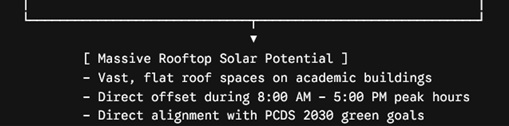
Operating large-scale academic complexes and specialized medical centers requires continuous, heavy power draw. Centralized air conditioning in multi-story lecture halls, high-performance computing clusters, diagnostic imaging equipment, and climate-controlled research laboratories operate at maximum capacity during standard weekday hours 8AM to 5PM.
Deploying rooftop solar across these extensive institutional roofs offers immediate advantages:
Targeted Operational Savings: Solar panels generate peak power precisely when campus administrative buildings, medical centers, and laboratories draw maximum power from the grid.
Unlocking Budget for Education & Healthcare: Direct utility savings can be redirected back into academic research, facility maintenance, and patient care.
Leading Sarawak’s Energy Transition: Equipping institutional rooftops with solar technology sets a visible benchmark for students, researchers, and visitors, actively advancing the state’s green transition goals.
2. Suburban Retail, Commercial Plazas & Light Industry: Protecting Operational Margins
As Kota Samarahan’s population grows, its commercial landscape expands along with it. Vibrant hubs like Aiman Square, The Summer Mall corridor, Uni Central, and commercial developments along Jalan Muara Tuang serve thousands of students, healthcare staff, civil servants, and local residents daily.
SUBURBAN COMMERCIAL MARGIN SHIELD
- High Daytime Business Overhead
- - Supermarket display freezers & chillers
- - Multi-unit air conditioning in retail
- - Commercial kitchen exhausts & laundry
- The Rooftop Solar Solution
- - Rooftop PV generates power in real time
- - Directly offsets commercial grid rates
- - Safeguards net monthly profit margins
From supermarket operators running walk-in chillers to busy cafes, laundromats, private medical clinics, student accommodation management, and light fabrication yards, daytime electricity expenses represent a significant recurring cost:
1-to-1 Business Hours Match: Commercial operations peak during daylight hours, making rooftop solar an exact fit for daytime refrigeration, air conditioning, and equipment usage.
Stabilizing Business Overheads: Solar PV acts as an operational shield, protecting local family-owned enterprises and commercial property managers against tariff adjustments and locking in predictable overhead costs for decades.
3. Asajaya & Sadong Jaya Coastal Agro-Food Belt: Strengthening Farm-to-Table Value
Beyond the urban center lies Samarahan Division’s agricultural engine: the rich coastal plains of Asajaya and Sadong Jaya. Known for extensive coconut plantations, sweet pineapple farms, and active riverine and coastal fisheries, this region plays a critical role in Sarawak’s food security.
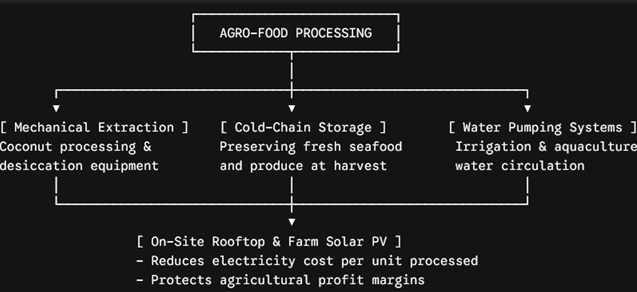
Modern agricultural processing requires steady, reliable power. Mechanical coconut desiccation, cold storage units for fresh produce, and high-volume water pumping for aquaculture draw substantial daytime electricity.
By installing solar systems on agricultural processing roofs and farm facilities:
Lowering Processing Costs: Solar power offsets grid reliance during extraction and preservation, reducing the energy cost per kilogram of produce processed.
Protecting Agricultural Margins: Lower operating expenses help farmers and processors maintain healthy profit margins while supplying fresh food across the division and into Kuching markets.
4. Rapid Suburban Growth: Beating the Midday Heat in Desa Ilmu, Uni-Vista, & Riveria
Kota Samarahan has become a top choice for residential living in Greater Kuching. Estates across Desa Ilmu, Taman Uni-Vista, Uni Central, Riveria, and surrounding residential developments are home to university lecturers, healthcare professionals, civil servants, young families, and student rentals.
Samarahan’s warm, humid lowland tropical climate means that during midday and early afternoon hours, residential indoor temperatures rise quickly. For families working from home, students studying for exams, or parents caring for young children, running multi-split inverter air conditioners is essential for everyday comfort.
However, heavy daytime air-con usage often triggers SESCO’s tiered residential tariff structure:
THE SESCO BILL BUFFER
- Without Solar
- - High afternoon AC usage for cooling
- - Pushes usage past 1,300 kWh threshold
- - Triggers top-tier SESCO electricity rates
- With Solar
- - Equatorial sun powers home cooling
- - Directly absorbs daytime baseload
- - Keeps total usage in lower tariff tiers
The SESCO “Bill Buffer”: High household power consumption can easily push families past subsidized tiers and into SESCO’s most expensive bracket (exceeding 1,300 kWh per month). A residential rooftop solar system handles your daytime baseline consumption (air-con, refrigerators, home appliances) as it occurs.
Guilt-Free Afternoon Comfort: Offsetting daytime grid pull during the hottest hours keeps your net monthly grid usage safely below the expensive 1,300 kWh threshold, allowing your family to stay cool without worrying about a bill jump at the end of the month.
The Verdict: Smart Energy for the Town of Tomorrow
Kota Samarahan has always been defined by education, progress, and forward-thinking planning.
Installing rooftop solar isn’t a complex corporate exercise; it is a practical, value-adding infrastructure upgrade that lowers institutional expenses, safeguards local commercial profits, supports sustainable coastal agriculture, and brings worry-free comfort to suburban homes.
As Samarahan leads Sarawak into a smarter, greener future, the power to fuel that journey is right above your roof.