
Look across the vast, green landscape of Kapit Division, and you see the true pulse of Sarawak. From the winding waters of the mighty Rajang River to the bustling streets of Kapit town, Song, Belaga, and Bukit Mabong, this has always been a land of pioneers, strength, and deep riverine traditions.
For decades, Kapit has given its land and waters to power the nation. Now, a quiet new energy revolution is happening—one that doesn’t belong to massive industrial grids or distant powerhouses, but directly to you, your family, and your roof.
1. The Powerhouse of Malaysia: The Pride and Paradox of Bakun & Murum
Kapit is the literal engine room of Sarawak’s energy landscape. Home to the massive Bakun Hydroelectric Dam and Murum Dam (with the Baleh project expanding our energy legacy), the Seventh Division generates the vast majority of the clean electricity driving factories and cities across the state and beyond.
There is immense local pride in being the heart of Sarawak’s power. Yet, there has always been a subtle paradox: while millions of kilowatt-hours flow down the high-voltage lines to power distant cities, local homes and shopkeepers are still subject to monthly utility bills and grid fluctuations.
Going solar turns this dynamic on its head. It shifts clean energy from a state-wide export to personal energy ownership:
Your Own Independent Powerhouse: Just as Bakun captures the strength of our rivers, rooftop solar panels capture the intense tropical sun beating down on your roof every day.
Power on Your Own Terms: Instead of relying solely on centralized grid distribution, solar allows you to generate, use, and control your own electricity right where you live and work.
2. Overcoming Geographical Isolation: Energy Resilience Beyond the Road
The opening of the landmark Kapit-Sibu road was a historic milestone, connecting our division to the broader state road network. But Kapit remains vast, rugged, and wild.
Running power lines through hundreds of kilometers of dense rainforest, steep hills, and river valleys is an incredible engineering feat, but nature always has the final say. Tropical storms, fallen timber, and landslides can easily cause localized grid interruptions or voltage dips in outlying areas, logging outposts, and distant longhouses.
DECENTRALIZED ENERGY RESILIENCE
- The Centralized Grid
- -Long cables through dense jungle.
- -Vulnerable to fallen trees & storms.
- Your Rooftop Solar
- -Directly above your head.
- -Resilient, silent, and independent.
Solar PV (photovoltaic) technology represents the ultimate form of self-reliance:
Decentralized Power: Your rooftop system produces energy locally, eliminating reliance on miles of jungle power lines.
Uninterrupted Comfort: When paired with local battery storage, a solar system ensures your lights, refrigerators, chest freezers, and internet routers stay running continuously—even when a storm knocks out the main line.
3. Revolutionizing Rajang River Commerce: Powering Kapit, Song, & Belaga Shoplots
Walk through the commercial centers along the Rajang River—from the vibrant town square and markets in Kapit town to the waterfront shoplots of Song and Belaga—and you will see businesses that run continuously throughout the day.
For local eateries, coffee shops, grocery stores, and river-logistics offices, daytime operating expenses can be a major challenge to monthly profit margins.
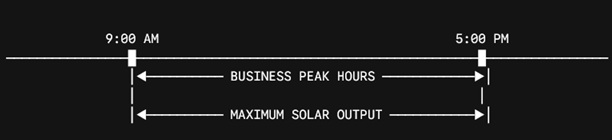
Because commercial activity peaks between 9:00 AM and 5:00 PM, business hours align with maximum solar generation:
Zero-Anxiety Daytime Cooling: Keep commercial fans, air conditioners, and bright retail lighting running at full capacity during peak afternoon heat without fearing a spike in your monthly SESCO bill.
Preserving Local Produce & Catch: Industrial ice-makers and display freezers are non-negotiable for preserving fresh river fish (like the prized Empurau or Semah) and local meats. Solar directly offsets the heavy electrical draw of compressor equipment during the hottest hours of the day.
4. Preserving the Longhouse Way of Life with Modern Comfort
Up the tributaries of the Baleh, Balui, and Murum rivers, the longhouse remains the cultural and social heart of the community. Life along the ruai is rich in tradition, but modern longhouse living requires modern utility solutions.
For years, remote communities had to rely on noisy, expensive diesel generators that ran for only a few hours each evening, emitting unpleasant fumes and requiring heavy fuel drums to be transported upriver by boat.
Solar energy offers a clean, quiet upgrade that fits seamlessly into the longhouse lifestyle:
24-Hour Cold Storage: Keep large chest freezers running continuously day and night to safely store wild boar, jungle produce, and river fish harvests without worrying about food spoilage or generator fuel running dry.
Brighter Futures for the Young Ones: Children can study under steady, bright LED lighting in the evening without eye strain, allowing them to excel in their education without the hum and smoke of a generator engine.
Silent Preservation: Enjoy 24-hour electricity while preserving the peaceful, natural sounds of the river and forest.
The Takeaway: Taking Control of Kapit’s Next Chapter
Kapit has always powered Sarawak. Now, it is time for Kapit to power itself—directly, independently, and sustainably.
Installing solar panels on your home, shoplot, or longhouse isn’t about chasing complicated corporate trends. It is about practical self-reliance, lowering daily operating expenses, and bringing reliable, 24-hour comfort to your family.
Let’s take the energy that has always defined our division and bring it right to your roof.