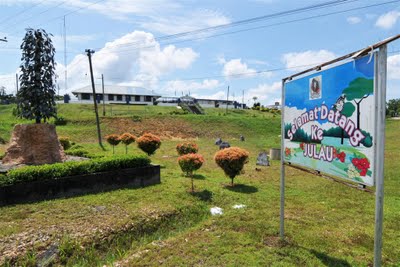
Walk into any longhouse in Julau, and you will immediately feel the warmth of community. From the shared conversations along the ruai to the beautiful, rolling hills covered in black pepper vines, Julau is a place defined by its rich heritage, deep community spirit, and hard work.
But for decades, living and farming in the beautiful interior of Sarawak has come with a silent, heavy challenge: reliable power.
While city slickers in Kuching talk about solar in terms of complex financial portfolios, payback years, and smart-home gadgets, here in Julau, we know the truth. Solar isn’t about chasing a theoretical financial return. It is about something far more valuable—daily freedom, community safety, and agricultural pride.
1. The Reality of Rural Power: No More “Generator Fuel Runs”
For generations, the heartbeat of many Julau longhouses was accompanied by the loud, rhythmic chugging of a diesel generator set (genset).
While generators brought light, they also brought a heavy physical and financial burden to every family:
The Logistical Headache: Imagine the sweat and effort of purchasing heavy diesel drums in town, loading them onto longboats, transporting them upriver, or hauling them over muddy timber roads.
The Constant Rationing: Because fuel is expensive and hard to get, most generators only run for a few hours a night—usually from $6:30\text{ PM}$ to $10:30\text{ PM}$. When the engine cuts out, the longhouse plunges back into darkness.
Switching to solar—inspired by the life-changing spirit of the Sarawak Alternative Rural Electrification Scheme (SARES)—is like taking a deep, quiet breath of fresh air.
Suddenly, the constant, smelly exhaust fumes and the deafening roar of the generator are gone, replaced by 24-hour silent, clean energy. For a longhouse family, this means the freedom to run a refrigerator to keep meat and fresh jungle produce from spoiling. It means being able to use modern household appliances whenever you need them, and hosting vibrant community gatherings late into the night without counting the cost of diesel by the liter.
2. Empowering the Pepper & Agri-Economy: A New Tool for the Farm
Julau is proudly known as the heart of Sarawak’s black pepper country. Our farmers produce some of the finest pepper in the world, alongside quality rubber and paddy. But traditional farming is physically demanding, and processing crops by hand under limited daylight is exhausting.
Solar energy is changing the game by acting as a practical farming tool:
Solar-Powered Water Pumps: Easily draw water from nearby streams or gravity feeds to irrigate your pepper vines and crops, keeping them healthy even during dry spells.
Daytime Processing & Sorting: Run automated sorting screens or light processing equipment directly during the day—exactly when your solar panels are producing peak power.
Safe Night Packaging: With reliable, bright lighting, families can wash, sort, and package dried pepper berries comfortably in the evening, maximizing productivity without straining their eyes under weak lamplight.
When we talk about solar for Julau’s farms, we aren’t talking about Wall Street investments. We are talking about reducing your daily agricultural overhead, saving your physical energy, and securing your family’s livelihood.
3. Brightening the Ruai: Safety, Learning, and Peace of Mind
At its core, a longhouse is a giant family home. The ruai (the communal corridor) is where life happens—where children play, elders swap stories, and neighbors check in on one another.
- Safe Passageways
- Seniors walk safely along the corridor
LIFE ON THE RUAI
- Brighter Futures
- Children study easily without eye strain
- Fire Prevention
- No dangerous candles or kerosene lamps
With 24-hour solar power, the ruai stays safely lit.
For Our Children: Kids no longer have to rush their homework before the generator cuts out. They can study comfortably under bright, steady light, paving the way for a brighter academic future.
For Our Elders: Seniors can walk along the timber floorboards of the communal areas at night without fear of tripping or falling in the dark.
For Our Safety: When the generator fuel runs dry, families historically had to rely on candles and kerosene lamps. Solar completely eliminates these dangerous open flames, dramatically reducing the risk of devastating longhouse fires.
4. Lighting Up the Heart of Sarawak
The green transition in Sarawak isn’t just happening in modern high-rises; it is happening right here in the interior. Solar projects in Julau align beautifully with Sarawak’s Rural Electrification Masterplan, which aims to bring electricity to 100% of our communities.
Solar is not a “make-do” alternative for areas the main power grid hasn’t reached yet. It is a state-of-the-art, high-tech, and incredibly resilient solution. It gives remote communities absolute energy independence, powered by the very sun that grows our famous Sarawak pepper.
The Takeaway:
We don’t need fancy ROI calculators to see the value of solar in Julau. We see it in the quiet nights, the cold refrigerators, the bright classrooms, and the thriving pepper farms. It is about bringing the modern conveniences of tomorrow to the rich traditions of today—giving our communities the freedom and comfort they truly deserve.